



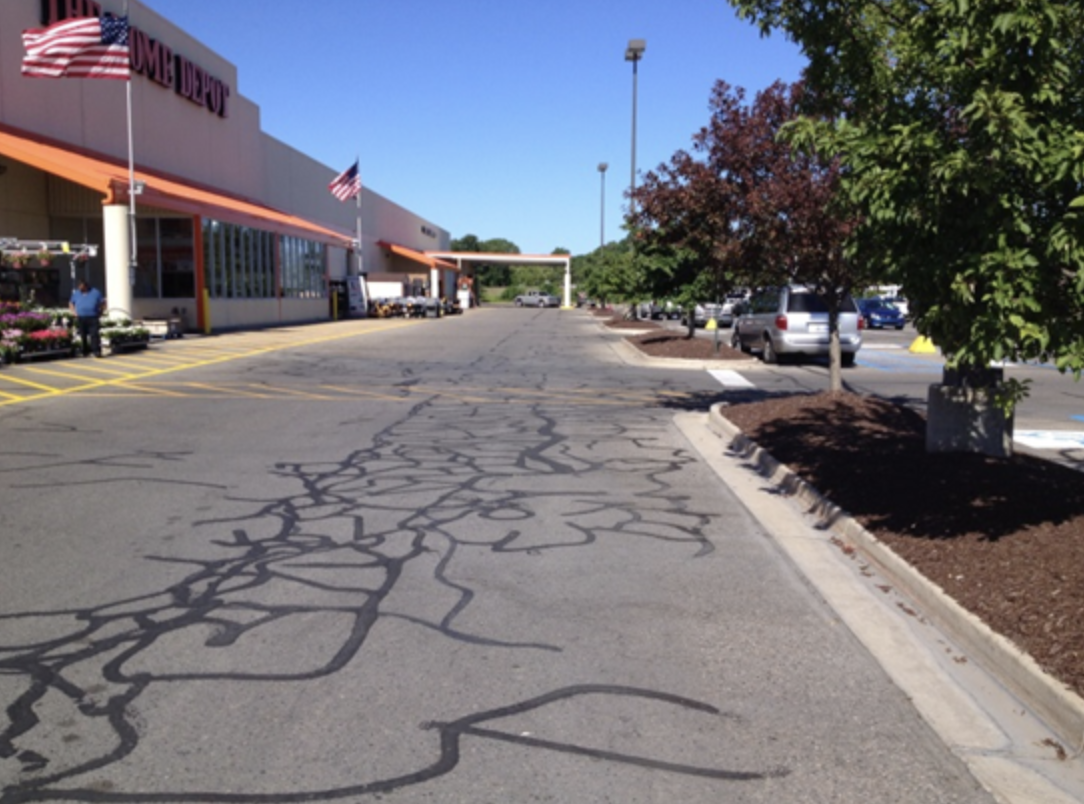
Green Bay’s Crack Sealing Experts: Stop Small Cracks, Save Big!
Cracks are how water gets into pavement, and in Wisconsin, water that gets in freezes, expands, and turns a hairline crack into a pothole or a broken slab. American Pavement Solutions seals and fills cracks in both asphalt and concrete for commercial parking lots, roads, loading areas, and sidewalks across Green Bay and Northeast Wisconsin. We’ve done it since 1979, and our Guaranteed System backs every job.
Asphalt Crack Sealing
Asphalt crack sealing puts a flexible, hot-applied rubberized sealant into working cracks: cracks that open and close as the pavement expands and contracts through the seasons. The sealant bonds to both sides of the crack and stretches with movement, keeping water out of the base.
- Our asphalt crack sealing process:
- Clean each crack with compressed air or a heat lance to remove dirt, debris, and vegetation.
- Route working cracks where needed to create a clean reservoir for the sealant.
- Apply high-quality hot rubberized sealant, one of the best joint sealants on the market.
- Finish with a band or squeegee over the crack for a watertight seal, then allow it to cure before reopening traffic.
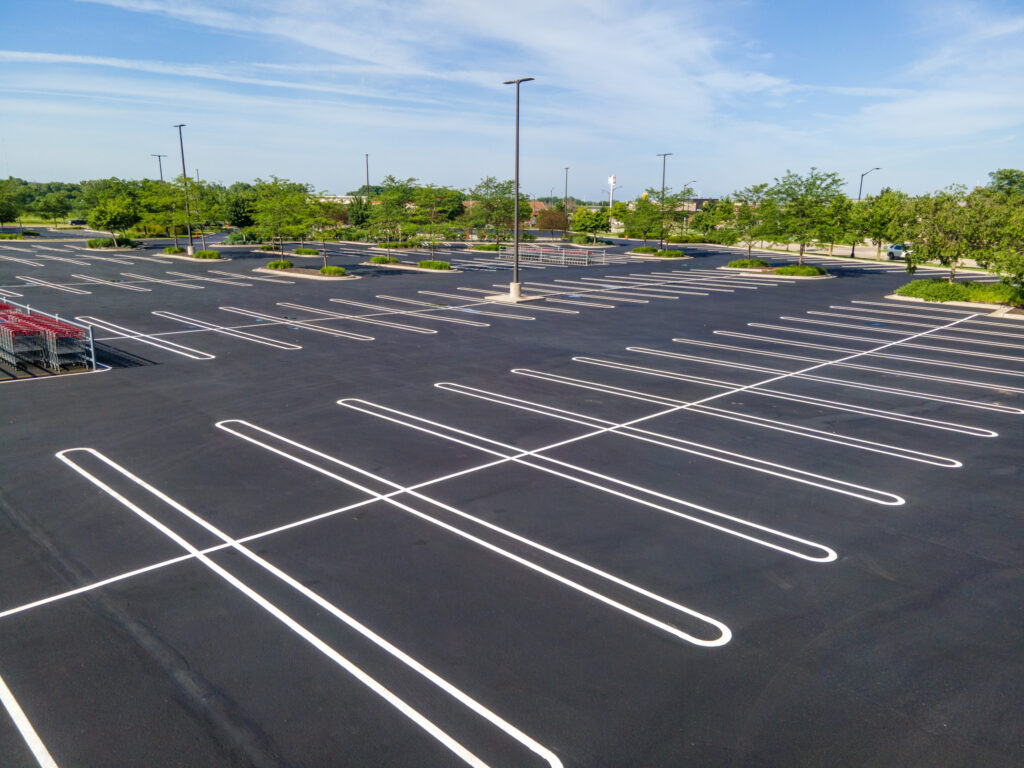
Asphalt Crack Filling
Asphalt crack filling is used for wider, non-moving cracks, such as longitudinal cracks, joint lines, and edge cracks. Professional-grade asphalt crack filler fills the void and stops water from reaching the base. Store-bought asphalt crack filler can work on a residential driveway, but on commercial pavement that sees trucks, plows, and constant traffic, hot-applied commercial filler lasts far longer.
Sealing or filling, which do you need?
| Asphalt crack sealing | Asphalt crack filling | |
| Crack type | Working cracks that move seasonally | Non-working, wider or more stable cracks |
| Material | Flexible hot rubberized sealant | Asphalt crack filler (hot or cold applied) |
| Prep | Clean, often routed | Clean |
| Typical lifespan | Longer | Shorter |
| Best for | Parking lots, roads, high-traffic pavement | Older pavement, budget-driven repairs |
On most commercial lots, we use both, matching the material to each crack. Your written proposal shows exactly which is which.
Concrete Crack Sealing and Filling
Concrete cracks for different reasons than asphalt: shrinkage, settlement, freeze-thaw damage, and joints that have lost their filler. Because concrete is rigid, the repair material has to match the extent of crack movement.
- Concrete crack sealer. A flexible polyurethane or silicone sealant for cracks and control joints that move. It keeps water and de-icing salt out of the slab, which helps prevent spalling and rebar corrosion.
- Concrete crack filler. A semi-rigid or epoxy-based filler for stable cracks in slabs, sidewalks, and loading dock aprons, restoring a smooth, safer surface.
- Joint resealing. Removing failed expansion and control joint material and installing new backer rod and sealant.
We seal concrete cracks on sidewalks, curbs, dumpster pads, loading docks, warehouse aprons, and parking structures. Spalled or broken concrete may need more than a crack sealer. See our concrete spalling repair guide and concrete services.
Why Crack Sealing Pays Off
- Prevents potholes and base failure by keeping water out of the sub-base
- Extends pavement life for a fraction of the cost of patching or replacement
- Reduces trip hazards and liability on sidewalks and walkways
- Prepares the surface for sealcoating, since sealcoat doesn’t fill cracks
Why Property Managers Choose American Pavement Solutions
- Family-owned and operated since 1979
- Commercial-grade hot-pour materials and modern equipment
- Our Guaranteed System, backed by a comprehensive guarantee
- Fast, efficient crews that phase work around your tenants
- Serving Green Bay, Appleton, Oshkosh, Ashwaubenon, and the surrounding region
Crack Sealing FAQs
What is the best asphalt crack filler for a parking lot?
For commercial lots, hot-applied rubberized sealant outperforms pourable or cartridge crack fillers from hardware stores. It stays flexible through Wisconsin temperature swings and bonds better to the crack walls.
How often should asphalt cracks be sealed?
Usually, every 3 to 5 years, or sooner if you see new cracks or existing ones growing. Seal any crack wider than about 1/4 inch.
Can you seal concrete cracks in cold weather?
Some concrete crack sealers can be applied at cooler temperatures, but the crack has to be clean and dry. Most concrete and asphalt crack sealing should be finished before the first hard freeze.
Should cracks be sealed before sealcoating?
Yes. Crack sealing always comes first. Sealcoat protects the surface but won’t bridge or fill cracks.
Get a Free Crack Sealing Estimate
Stop small cracks before they become big repairs. Request a free estimate or call 1-800-236-7404.